
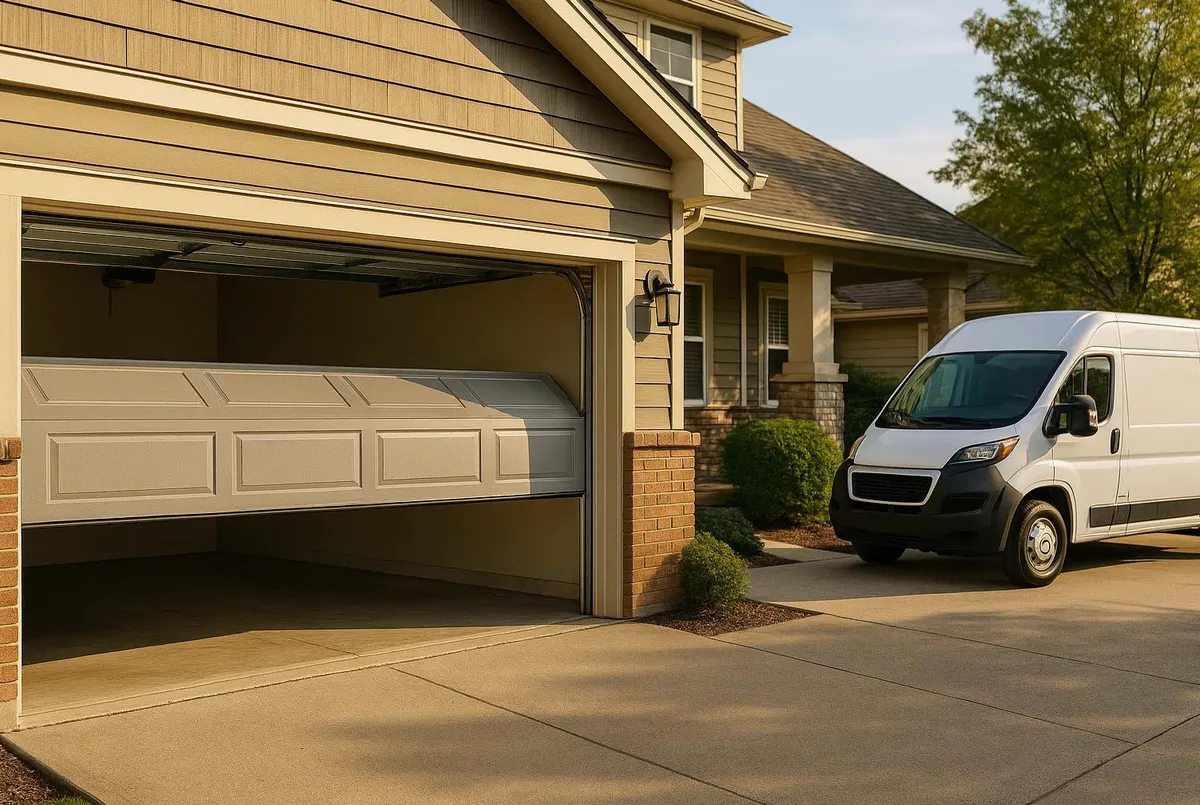
What We See on Service Calls This Time of Year
Every fall, our technicians get calls that start the same way: "It worked fine all summer, and now it's grinding/sticking/sagging on one side." Most of these doors haven't had a hand laid on them since spring. Hart County's swing from humid summers to cold, icy winters is hard on hardware — metal contracts, lubricant dries out, and road salt tracked in on tires eats away at bottom brackets and tracks. A twenty-minute check before the cold really sets in catches most of this before it turns into an emergency call on a Saturday morning with ice on the driveway.
Tools You'll Need
- A step stool or sturdy ladder
- A flashlight
- A level (a smartphone level app works)
- A soft rag
- Garage-door-specific lubricant (silicone or lithium-based spray, not WD-40 or household oil)
- A tape measure (optional, for the balance test)
The 20-Minute Routine
- Look at the tracks. Walk the full length of both vertical tracks with your flashlight. You're checking for dents, rust, or gaps where the track has pulled away from the wall bracket. Wipe off any built-up grime or dried salt residue with your rag.
- Check the rollers. Watch the rollers as the door opens and closes (run it once manually if you can disengage the opener, or just watch during a normal open/close cycle). Look for wobble, flat spots, or rollers that are cracked rather than round.
- Test the auto-reverse safety feature. Place a roll of paper towels or a 2x4 flat on the ground under the door and close it. The door should reverse immediately on contact. If it doesn't, stop using the opener until this is fixed — this is a safety issue, not a convenience one.
- Inspect the weatherstripping. Run your hand along the bottom seal and side seals. Cracked, flattened, or torn weatherstripping lets in cold air and moisture, which is a bigger deal once temperatures start dropping and ice forms around the door's edges.
- Lubricate the moving parts. Spray the rollers, hinges, and the track's roller contact points. Avoid spraying the springs themselves — more on that below.
- Tighten visible hardware. Check the bolts on the track brackets and the hinges between panels. Vibration from regular use loosens these over a season; a quarter-turn with a wrench is often all it takes.
- Do a visual balance check. With the opener disengaged (pull the red release cord), lift the door halfway by hand and let go. A balanced door stays put. One that falls or shoots up is a sign the springs are compensating incorrectly, which strains the opener and cables.
Where to Stop and Call a Technician
The balance test is the line in the sand. If your door doesn't hold its position, do not try to adjust the springs yourself. Torsion and extension springs are under enormous tension, and homeowner injuries from DIY spring adjustments are common enough that every manufacturer warns against it. The same goes for frayed or kinked cables, bent tracks that need realignment, or an opener that's grinding but the gears underneath aren't visible to you. These aren't once-a-season fixable items — they need the right tools and training.
When to Call Cub Run Garage Door
If your balance test fails, you hear grinding during opener cycles, or the door hesitates and reverses for no reason, it's time to call us. We handle Garage Door Maintenance visits that cover everything in this list plus the parts that need a trained eye — spring tension, cable condition, and opener calibration. If a spring has already let go or looks stretched and uneven, our Spring Replacement service gets it swapped safely and the door rebalanced the same visit.
Whether you're in Cub Run, Munfordville, Horse Cave, or anywhere else around Hart County, give Cub Run Garage Door a call before winter weather makes a small issue into a stuck door at the worst possible time. We show up on time and treat every call like it's a neighbor's.