
The Mistake Almost Everyone Makes First
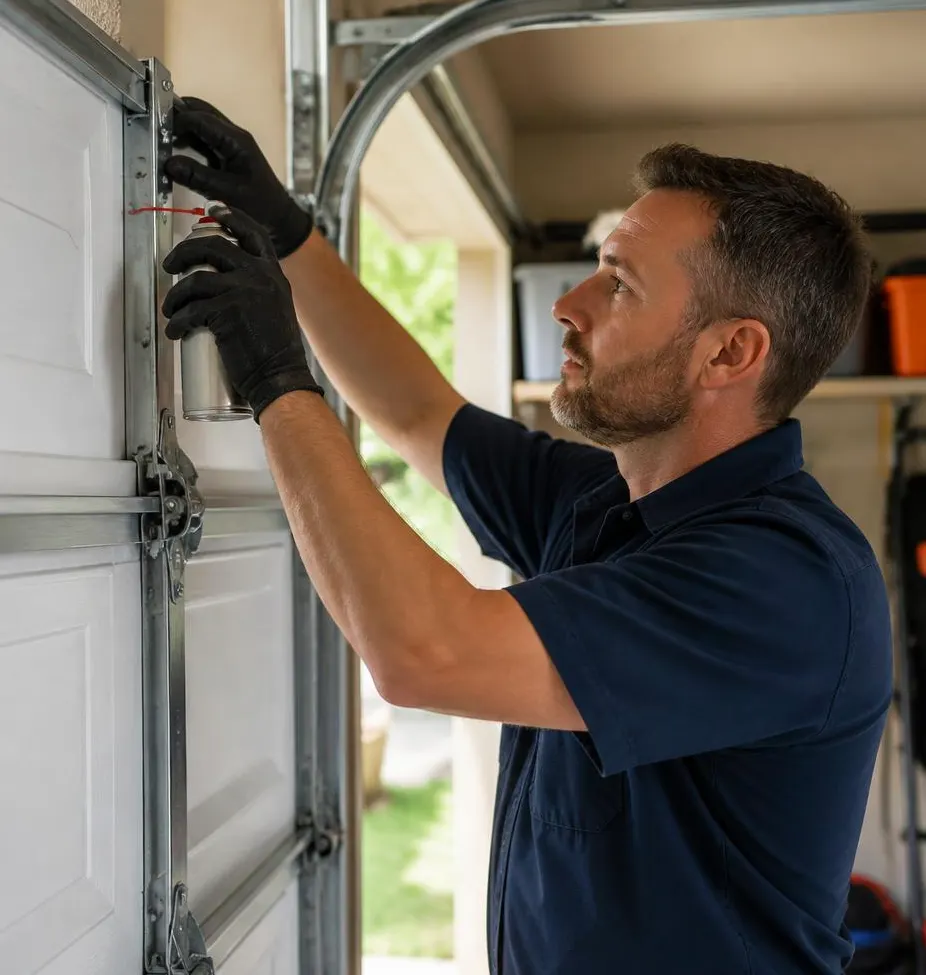
The door starts grinding or squeaking, so someone grabs a can of spray lubricant, hits every moving part they can reach, and calls it done. It's an easy win — the door goes quiet almost immediately, and it feels like the problem is solved. That's exactly why this turns into a household argument later. One person is convinced the door is fine because it stopped making noise. The other one notices it's back to grinding, sticking, or jerking a few weeks later and wants to know why nobody called a technician the first time.
Here's the part that settles the argument: lubricant reduces friction, but it doesn't repair anything. It can make a worn roller or a fraying cable sound quiet for a little while, but the part underneath is still wearing out. The failure doesn't go away — it just gets delayed until it happens all at once, usually on a cold morning when you're already late and the door won't budge.
Worn Rollers: The Part That Makes the Noise
Rollers are the small wheels that guide the door along the track. Over time, especially with age or sun exposure, they develop flat spots, cracks, or rust pitting. A worn roller doesn't glide smoothly anymore — it catches and releases, which is what produces that rhythmic grinding or squeaking sound as the door opens and closes.
- Symptoms: rhythmic squeak or grind, visible wobble as the door moves, door hesitates at the same spot every time
- Trade-off: lubricant can quiet a worn roller temporarily, but the flat spot or crack is still there, and it will keep getting worse under the door's weight
Frayed Cables: The Part That Makes It Dangerous
The cables are what actually hold the door's weight when it's attached to the spring system. A frayed cable is a different category of problem — it's not just noise, it's a structural failure waiting to happen. If a cable snaps while the door is up, the door can drop suddenly, and if it snaps under tension it can whip with enough force to cause real injury.
- Symptoms: visible broken strands near the bottom bracket, rust along the cable length, the door sitting crooked or uneven when closed, a popping sound rather than a steady grind
- What not to do: never try to touch, adjust, or replace a cable yourself. It stays under tension from the spring system even when the door looks still, and that stored energy is what makes garage doors one of the more dangerous DIY projects in a home
Why This Wears Out Faster Here
Hart County's weather is hard on garage door hardware. Cold winters bring ice and road salt tracked in from the driveway, which speeds up rust on cables and rollers. Humid summers swell wood doors and corrode exposed metal. And the big seasonal swings between the two — hot, sticky summers and freezing winters — make the metal tracks and hardware expand and contract constantly, which loosens fasteners and accelerates wear on rollers that are already past their prime. A roller or cable that might last for years in a milder climate often shows wear sooner here.
What You Can Safely Check Yourself
- Open the door partway and look at each roller — check for flat spots, cracks, or visible rust
- Look at the cables near the bottom corners of the door for broken strands or fraying, without touching them
- Listen for the difference between a steady grind (rollers) and a sharp pop or snap (cables or springs)
- With the opener disconnected, lift the door by hand partway and see if it holds its position — if it drops or feels heavy, the spring system needs attention, not the rollers
When to Call Cub Run Garage Door
If you're seeing rust, fraying, or a door that's starting to sit crooked, that's not a lubricant problem — it's time for a real inspection. Cub Run Garage Door handles both ends of this: Garage Door Maintenance to catch worn rollers and failing hardware before they become bigger repairs, and Spring Replacement when the cables or springs themselves have reached the end of their life. A technician will check the balance, inspect every cable and roller, and replace what's actually worn instead of just spraying over it.
If your garage door has started grinding, popping, or hanging crooked, don't let it ride through another Hart County winter. Call Cub Run Garage Door to get it inspected properly — serving Cub Run, Munfordville, Horse Cave, Bonnieville, Hardyville, Canmer, Upton, and Cave City.